What to do after a car accident in California
The first hours and days after a crash decide much of what a claim can later prove. These are the steps, in the order they matter.
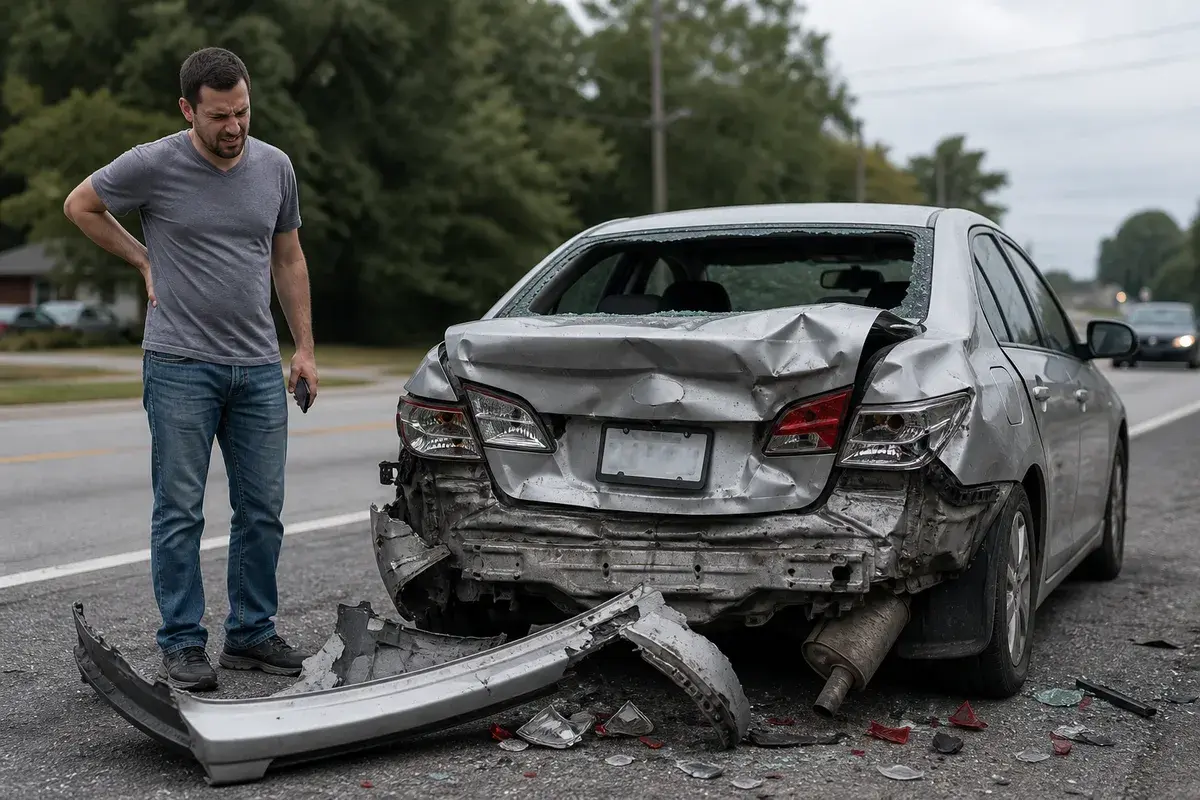
1. Get safe and call 911 if anyone is hurt
Move out of traffic if you can do so safely, turn on hazard lights, and call 911 if anyone is injured. A police response creates an independent record of the scene.
2. Make the report California requires
Any crash causing injury, death, or more than $1,000 in property damage must be reported to the DMV on form SR-1 within 10 days, whether or not police came.
Source: Cal. Veh. Code § 16000
3. Document the scene
Photograph every vehicle from several angles, their final positions, the road, skid marks, traffic signals and signs, and your injuries. Get the other driver’s name, license, plate and insurance. Take names and phone numbers of witnesses — they are the hardest evidence to recover later.
4. Get medical care the same day or the next
Adrenaline hides injuries, and soft-tissue and head injuries often show up a day or two later. A gap between the crash and your first medical visit is the argument adjusters use most often to say your injury came from somewhere else.
5. Be careful with the other driver’s insurer
You do not have to give the other driver’s insurer a recorded statement. Anything you say — including “I’m fine” on the day of the crash — can be used to reduce the claim. Report the crash to your own insurer as your policy requires.
6. Do not accept the first offer before you know what cases like yours resolved for
Early offers are made before the full cost of treatment is known, and a signed release ends the claim permanently. Before you sign anything, compare your situation with real verdicts and settlements from similar crashes.
7. Keep the deadlines in view
California gives you 2 years to file an injury lawsuit (Cal. Code Civ. Proc. § 335.1). If a government vehicle or a road defect was involved, a much shorter clock applies. A written claim must be presented to the public entity within six months of the crash, before any lawsuit can be filed.
Real California results
Documented California verdicts and settlements from public court records.
| Case | Type | Result |
|---|---|---|
Alejandra Gonzalez v. County of Los Angeles Los Angeles County, 2026 · Car accident | Car accident | $1,500,000 settlement |
Jennifer Orta v. Matthew Bogy San Bernardino County, 2026 · Intersection crash | Intersection crash | $659,626 verdict |
Tito Flores v. CDS Equipment Los Angeles County, 2025 · Truck accident | Truck accident | $1,500,000 settlement |
Unger v. Greenberg Los Angeles County, 2023 · Car accident | Car accident | $600,000 settlement |
Cruz Luis v. Estate of Molloy Los Angeles County, 2025 · Rear-end collision | Rear-end collision | $1,425,000 settlement |
Real cases, shown as recorded in public court records. Verdicts are jury awards; settlements are agreed payments. They are other people’s cases and not predictions of what your case is worth. Every case is different. Prior results do not guarantee a similar outcome.
Frequently asked questions
Do I have to report a car accident in California?
Any crash causing injury, death, or more than $1,000 in property damage must be reported to the DMV on form SR-1 within 10 days, whether or not police came. (Cal. Veh. Code § 16000)
Should I see a doctor if I feel fine?
Yes. Many crash injuries appear hours or days later, and a prompt medical record protects both your health and your claim.
Compare your crash with real cases
Our AI matches what happened to you against documented California verdicts and settlements. Free, about 60 seconds.
More California guides
California cities
This guide in other states
This page is general information about California law, reviewed September 2026. It is not legal advice, laws change, and the right answer for your claim depends on its facts. CaseChecker.ai is not a law firm; it connects people with independent attorneys licensed in their state.